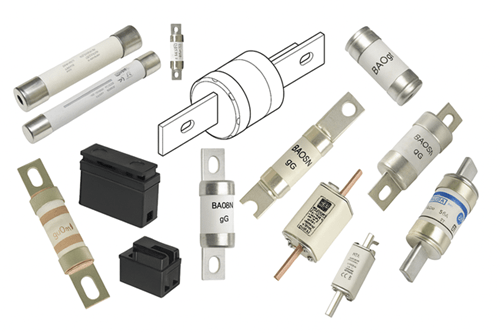
In every electrical system, safety is one of the most important concerns. When current flows beyond the expected range, it can damage equipment, create fire hazards, or even put human lives at risk. To prevent such issues, protective devices are used. One of the most reliable protective devices in modern electrical networks is the high rupturing capacity fuse, commonly known as an HRC fuse. This component is widely trusted for its efficiency in controlling faults and ensuring that circuits remain secure.
What is High Rupturing Capacity?
The term high rupturing capacity refers to the ability of a fuse to safely interrupt very high fault currents without exploding or creating secondary hazards. In simple terms, it means the fuse can handle extremely large fault currents, often in the range of thousands of amperes, while protecting the system.
Unlike ordinary fuses, which may only be able to clear smaller faults, an HRC fuse is specifically designed to remain stable and effective even when faced with extreme current surges. This makes it a reliable choice for industrial and commercial setups where high-power equipment is frequently used.
Why High Rupturing Capacity is Essential
Every electrical circuit is designed to carry a certain load. When the load exceeds the safe limit due to a short circuit or equipment failure, the flow of current rises sharply. If this fault current is not stopped immediately, the damage can be severe. This is where the high rupturing capacity fuse proves its importance.
It is built to clear fault currents of very high magnitude without shattering, melting uncontrollably, or spreading sparks. This ensures both equipment protection and human safety. In environments like power plants, factories, and data centers, having a reliable protective device is not optional—it is a necessity.
Construction of a High Rupturing Capacity Fuse
To understand why the high rupturing capacity fuse is so effective, we need to look at its design. An HRC fuse usually consists of:
- Fuse element: The part that carries current during normal operation and melts when a fault occurs. It is typically made of silver or other reliable metals.
- Fuse body: A strong ceramic body that resists high temperature and pressure during operation.
- Arc-quenching material: The body is filled with special powder, such as silica sand, that absorbs energy and helps extinguish the arc formed when the fuse blows.
- End caps or terminals: These allow the fuse to be securely connected to the circuit.
This construction ensures that when a fault occurs, the fuse element melts quickly, and the arc generated is controlled by the powder filling, preventing dangerous explosions.
Working Principle of High Rupturing Capacity Fuses
The working principle of a high rupturing capacity fuse is straightforward but highly effective. Under normal conditions, the fuse element allows current to pass without resistance. When the current rises beyond the rated value due to a fault, the heat generated in the element causes it to melt.
At the same time, an arc is produced between the melted ends. The arc-quenching powder absorbs the heat, cools down the arc, and extinguishes it almost instantly. This prevents the fault current from continuing and protects the equipment connected to the system.
Advantages of High Rupturing Capacity Fuses
The widespread use of HRC fuses can be attributed to their many advantages. Some of the key benefits include:
- High reliability – They work consistently under fault conditions without failure.
- Fast operation – The fuse clears the fault current quickly, reducing damage.
- Compact design – Even though they handle very high currents, they remain small and easy to install.
- Cost-effective – Compared to circuit breakers, HRC fuses are cheaper and require little maintenance.
- Safe operation – The high rupturing capacity ensures that no dangerous explosion occurs during fault clearance.
These features make them a go-to choice for protecting motors, transformers, and other heavy electrical equipment.
Limitations of High Rupturing Capacity Fuses
Although they offer many benefits, HRC fuses are not free from limitations. Some of the challenges include:
- Replacement after operation: Once the fuse blows, it cannot be reused and must be replaced.
- Not suitable for frequent switching: Unlike circuit breakers, HRC fuses are not designed for regular on-off operations.
- Need for spare stock: Industries need to maintain spare fuses to ensure quick replacement during faults.
Even with these drawbacks, the high rupturing capacity fuse continues to be valued for its simplicity and effectiveness.
Applications of High Rupturing Capacity Fuses
The applications of HRC fuses are vast, thanks to their ability to handle extreme fault conditions. Some common areas where they are used include:
- Industrial machinery – Protecting motors and machines from overcurrent.
- Power distribution systems – Ensuring transformers and feeders are protected.
- Commercial buildings – Safeguarding electrical panels from faults.
- Data centers and IT setups – Preventing equipment damage due to sudden surges.
- Power plants – Handling high short-circuit currents in generation and distribution.
Wherever the risk of heavy fault current exists, high rupturing capacity devices provide the necessary protection.
High Rupturing Capacity vs Normal Fuses
To better appreciate their importance, it helps to compare HRC fuses with ordinary fuses. Normal fuses are generally used in household applications where the current levels are not extremely high. They are cheaper but less reliable for heavy-duty operations.
On the other hand, a high rupturing capacity fuse is specifically engineered for industrial and commercial use. It withstands much larger fault currents without danger, making it suitable for critical applications where failure is not an option.
Future of High Rupturing Capacity Fuses
With advancements in technology, protective devices are also evolving. Circuit breakers, digital protection relays, and smart monitoring systems are gaining popularity. However, the high rupturing capacity fuse still holds its place because of its simplicity, affordability, and reliability.
As industries continue to expand, especially in developing regions, the demand for durable and safe electrical protection will keep HRC fuses relevant for many years to come.
Conclusion
In electrical protection, few devices are as trusted as the high rupturing capacity fuse. Its ability to safely interrupt enormous fault currents makes it a cornerstone of modern electrical systems. From power plants to industrial factories, this device ensures that equipment remains safe and that dangerous accidents are prevented.
Though it has certain limitations, its advantages far outweigh them. With its reliable design, fast action, and proven safety record, the high rupturing capacity fuse remains an essential part of the electrical world.
Whether you are an engineer, technician, or simply someone interested in how electricity is managed, understanding the role of HRC fuses provides valuable insight into how safety is maintained in our increasingly power-driven society.